|
 President’s
Column President’s
Column
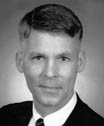
A Note from Peter Brehm
NAGASA President and CEO
A New Year offers the opportunity to reflect upon our lives,
our businesses, and in general, the way in which we accomplish
personal and professional tasks. As I begin the journey associated
with serving as the new President and CEO of NAGASA, here are
some of my New Year reflections and proposals. First, the reflections:
The Channel is Changing
No surprises here! Board Chair Brian Kroot led off in his comments
in the previous issue of The Compass by stating, “Change.
At some point it is inevitable.” My note of introduction
to the NAGASA membership cited the adage that change is constant,
and the Channel will change as printing, imaging, and publishing
processes adapt to new markets, new technologies, and new business
needs. Past and current mergers and consolidations within the
Channel are examples of this change, while the printing industry’s
consolidation and migration towards a digital workflow are further
indication that things are not staying the same. Offering his
insights on this theme, BusinessWeek Publisher Michael Bloomberg
was quoted in an article on the 1998 BusinessWeek CEO Summit:
“My greatest fear is that there are three guys in a garage
right now doing the same thing to us that we did to Reuters and
Dow Jones. . . .
Companies rise and fall before they know it, and staying on top
requires a CEO to anticipate major technological changes before
they happen.” My only upgrade to his comment is that technical
change is just one of many other process components to which we
must pay attention.
We must recognize that every outcome is the result of a process
I mention process components in the first reflection, and it is
a key term. As suggested by Bloomberg, we sometimes think of technical
developments and other changes as unique events. I propose that
a better model is to think of everything we do as a process that
includes: 1) one or more inputs; 2) one or more outputs; 3) a
value-added transformation step that changes and adds value to
the input in order to get the output; and 4) process components,
including machines, people, materials, the environment, and methods.
Once we begin viewing the world with this process model, it helps
us analyze our value-added role in the process as well as what
we might improve to add even more value with less waste and rework.
Building on this, it is useful to note that the Channel is a valuable
segment of the broader printing, publishing, and imaging communications
process.
We must change the way we manage processes
Recognizing that everything we do is a process, the next suggestion
is to change the way we manage these processes. When confronted
with process change — a better word might be variation —
we have the choice of ignoring or addressing it. If we are paying
attention, we might be able to anticipate this variation and gain
time in addressing its implications on our environment. Further,
to ignore the consequences of our changing world is to make a
choice, although a passive one. For these reasons, NAGASA staff
and members must continue to focus
our resources on understanding and anticipating Channel developments.
We must then act on new ways of serving our customers, operating
our businesses, and working together in ways that benefit the
Channel and its customers.
Festina lente!
Aldus Manutius, a Venetian printer and publisher of the late 1500s
and early 1600s, used the phrase “Festina Lente” as
a tag line to describe how his company’s editors and press
operators worked. The Latin phrase translates as “Make haste
slowly.” I suggest this phrase encapsulates our path forward
in the Channel. While we cannot wait passively for business, technical,
social, legal, and environmental changes to affect our ability
to earn a fair return while meeting and exceeding customer needs,
we should be cautious about abandoning existing processes, technologies,
customers, and practices merely because they are not “new.”
Our caution, however, must be tempered with the knowledge that
we must keep exploring new methods, materials, machines, and other
process components that will help us better meet and exceed customer
expectations in a more timely manner while continuing to provide
the Channel with a fair return.
Now for the Proposals
While it is difficult (impossible?) for any one of us to remain
aware and understanding of all these changes, here are some proposals
that can help one begin to address this evolving world,
or reinforce the efforts of those who are already pursuing this
path:
Proposal Number 1: Find out what your external customers
want from your organization and what they are actually getting.
Then ask these same questions of your suppliers. Be sure to ask
your employees this question as well. Finally, work with your
customers to ask these questions of your customers’ customers:
what do these “end-users” expect from the communications
process as you and your customers define it, and what are they
getting? Once you have accomplished this — and none of these
efforts are easy — you are in a position of strength since
you no longer must assume what the world wants from your organization
and what they are getting. You know!
Proposal Number 2: In parallel with asking what your
key customers, suppliers, and other stakeholders want and what
they are getting, work with them to develop a short list of key
objective factors that your organization can and should measure
to assess how well it is doing. Business measurements are typically
dictated by financial statements and have names such as “profits,”
“gross sales,” and “debt/net worth.” Each
organization should also develop, define, and track process measurements.
Your customers are not fundamentally buying from you because of
your financial measurements — they buy from you because of
the consistency and quality of your processes, which are often
not measured as rigorously as the financial results.
Proposal No. 3: Remember that you are not alone. You are
part of a group of people within your organization, and you are
part of a business community, and you are part of a network of
customers and suppliers with whom you do business. All of these
groups represent resources you can tap for information and help.
You are also part of a marketplace — call it the Channel
— through which you can work to initiate needed research
and studies, get answers, and participate in efforts that advance
the state of the process. NAGASA is ready to assist. Contact us!
 Edwin
Richard Rigsbee: Edwin
Richard Rigsbee:
Premier Authority on Business Partnering to Address
Forum 99
With more than 300 published articles on partnering to his credit,
Edwin Richard Rigsbee has firmly established himself as the foremost
expert on the subject of partnering and developing successful
business relationships. For more than a decade, Rigsbee has presented
his theory for building successful business relationships to thousands
of people through his work — a book, The Art of Partnering,
audio and video programs, and hundreds of speaking engagements.
As the keynote speaker at Forum 99 — NAGASA’s Seventh
Annual Printing and Imaging Distribution Conference — Rigsbee
will give attendees a valuable overview of his win-win philosophy
to building relationship bridges that make business more profitable
and productive.
But Rigsbee isn’t just a talking head — he brings real-world
experience to the table. He has extensive management, marketing
and sales experience, having worked his way up the ladder from
entry-level sales jobs to become president and owner of a manufacturer
representative firm. Rigsbee has also served as an adjunct professor
at the University of California at Santa Barbara and California
Lutheran University.
Throughout his career, Rigsbee has used his philosophy to his
advantage, building relationship bridges with his customers to
make their businesses more profitable and their employees more
productive.
| "Forum 99 will provide a way for
[small- to medium-sized NAGASA members] to learn how [to expand
partner relationships] ‹ quickly, decisively and with increased
emphasis on improving the bottom line." |
His clients have included firms in such varied industries as
manufacturing, retail, distribution/sales, healthcare, finance,
publishing, entertainment and government, and he has consistently
gone to great lengths to make sure he has a strong command of
the specific businesses his clients are involved in.
His philosophy is based on a series of partnering, alliance and
relationship programs, covering such topics as strategic management;
partnering with competition; work supervisory
relationships; team building; maximizing marketing potential;
partnership selling; and partnering with customers to ensure customer
loyalty. The organizational answer to success is his
Partnering Pentad Model, which helps businesses develop the internal
and external alliances that are crucial to success.
NAGASA members at Forum 99 will be rewarded through their participation
in this event with the information needed to understand the true
concept of partnering.
“The need for NAGASA’s small- to medium-sized members
to expand partner relationships continues to grow,” said
NAGASA Membership Director Vickie Braxton Schulz. “Forum
99 will provide a way for them to learn how — quickly, decisively
and with increased emphasis on improving the bottom line.”
The issues covered by Rigsbee — and many others vital to
the Channel — will be discussed at length throughout Forum
99, which again promises to be the industry’s most rewarding
and valuable event of the year.
Forum 99 will give participants an arena to discuss new and emerging
opportunities for profitable growth in all aspects of distribution
in the communications industry. The four-day event will take place
at the Pointe Hilton Squaw Peak resort in Phoenix, Arizona from
April 24-27, 1999. Attendees will have the opportunity to participate
in a number of roundtable discussions about today’s most
pressing dealer issues, including the future of our
channel; different selling strategies for different clients; direct
sales; management information systems; taking risks; and more.
The event will also give attendees an opportunity to enjoy many
recreational activities — an optional golf and tennis tournament,
a tour of the city and a full schedule of evening activities will
complement the rest of the itinerary. On the last night, Forum
99 will wind down with a reception, awards banquet and ceremony,
and dancing.
A schedule of events for Forum 99 appears on page 3 of this issue
of The Compass, and registration forms for the event and hotel
accommodations are on pages 5-7. Don’t miss this indispensable
opportunity to better yourself, your business and your future
— sign up today!
|



 The Compass || Winter
1999
The Compass || Winter
1999